Tony's Lifetime Exteriors Deep Dive Into LP SmartSide: The Ultimate Engineered Wood Siding
Learn why LP SmartSide engineered wood siding is the durable, attractive, and budget-friendly choice for Minnesota homes with Tony’s Lifetime Exteriors.

Tony's Lifetime Exteriors provides siding installation and replacement for homeowners in St. Cloud and throughout Central Minnesota. We install vinyl, steel, seamless steel, and LP SmartSide engineered wood siding, helping homeowners choose the right material for their home's condition, appearance, maintenance needs, and budget.
Serving Central Minnesota since 1973, our in-house installation team takes the time to evaluate your home, explain your siding options, and address important details such as moisture protection and proper installation.


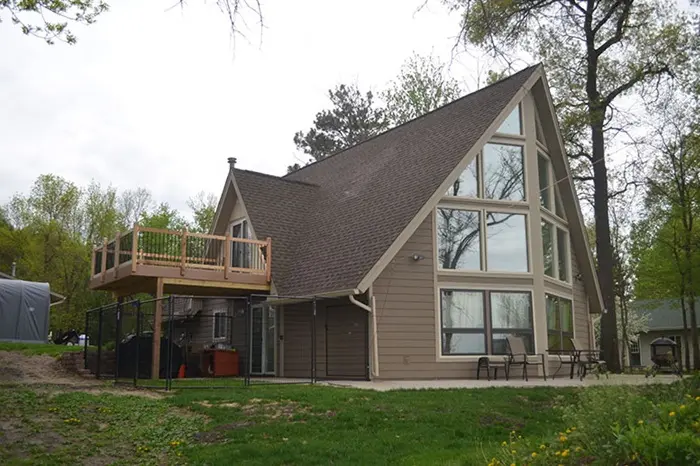
Case study of a lakefront renovation on Grand Lake in Cold Spring, MN. Tony's Lifetime Exteriors installed Olive Branch seamless steel siding, Versetta mortarless stone accents, replacement entry doors, and a custom screen room in under two weeks, dramatically enhancing curb appeal and outdoor usability.
Read the case studySee a custom residential exterior project on Territory Golf Course in St. Cloud, MN. Tony's Lifetime Exteriors installed white LP SmartSide board and batten siding, 100% cellular PVC Clubhouse vinyl decking, and Westbury C10 aluminum railings, overcoming rocky soil conditions and meeting timelines.
Read the case studyStart with the problem you want solved, because that is what separates these four materials. Drafts and air intrusion point one direction, moisture another, appearance and maintenance somewhere else again. We ask that question first, then match the material to it.
| Material | Core benefit | Best for | Maintenance | Durability |
|---|---|---|---|---|
| Vinyl | Affordable, widest color selection | Budget and color flexibility | No painting or caulking; wash it | Market Square .044 panel, thicker than entry-level |
| Seamless steel | Custom-formed on site, no butt seams | Fewer openings for moisture and air | Low; no repainting | Metal panel, holds appearance |
| Steel | Pest and weather resistance | Long-term ownership, no heat rippling | Low | Highly durable metal |
| LP SmartSide | Wood-grain look with engineered backing | Board-and-batten or lap wood appearance | Periodic finish care | Impact-resistant engineered wood |
If moisture and air intrusion are the concern, seamless steel removes the butt seams entirely. If appearance drives the project, LP SmartSide carries the deepest wood look. If budget and color choice matter most, Market Square vinyl does the job well — with the caveat below about dark colors on hot days. If you simply never want to think about the siding again, steel is usually where that conversation lands.
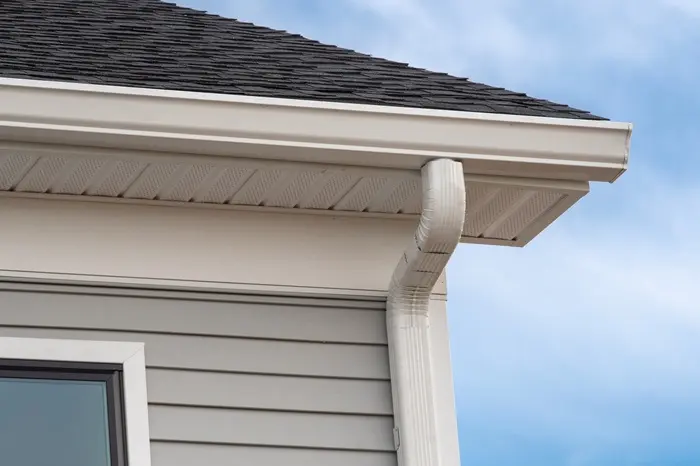
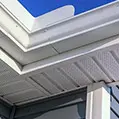
Soffit covers the underside of your roof overhang and does real work: it ventilates the attic so moisture can escape instead of collecting in a closed-off space, and when it's tight and undamaged it keeps hornets, bees and small animals from finding their way in.
Fascia is the board above the soffit, visible from the curb. Your gutters hang on it, and it supports the lowest edge of the roof. If fascia is soft or poorly fastened, the gutter system suffers with it — which is why we look at both whenever we quote a siding project. See our soffit and fascia installation page for details.
Before we talk products, we ask why you want new siding. Drafts, noise, moisture, appearance, maintenance — the answer changes the recommendation. When an installer never asks, the homeowner can end up with brand-new walls and the same draft or the same water stain they called about in the first place.
We also assess the home itself. Vinyl can melt from sunlight reflecting off your own windows — or your neighbor's. A contractor who doesn't evaluate that layout can leave you with warped siding shortly after installation, so we look for those risks before a color or a material is chosen.
From there, every material goes on per the manufacturer's specifications. On vinyl, that means adjusting cut gapping for the season — more room left at corners, windows and penetrations on a cold-weather install, tighter when we're hanging panels in July heat — letting panels float rather than sealing them tight, nailing in the center of the slot without driving fasteners overtight, and keeping every nail on the same side of the slot across a wall when centering isn't possible. We also tell homeowners up front what normal looks like: a darker vinyl absorbs more heat, and slight ripples can show on the hottest days, then relax again as temperatures cool. That is vinyl behaving the way vinyl behaves, and it is one of the reasons some homeowners move to steel when the budget allows.
Our installers are our own employees, and we've been working in Central Minnesota since 1973 — which is the reason a homeowner can still reach us in year six when a panel takes a hit from a ladder or a storm. We hear from people whose previous contractor simply stopped answering the phone.
Siding here lives through a 100-degree temperature swing between January and July, and every material on your wall expands and contracts with it. Vinyl moves the most, which is why cut gapping, fastening and spacing have to be adjusted for the season a project is installed in — get that wrong and panels lock up, buckle and look wavy. Summer storms and wind-driven rain add the other half of the problem: siding is designed to shed water, not seal it out, so the housewrap, flashing and drip caps behind the panels are what actually keep moisture out of your wall.
It's worth knowing that vinyl siding isn't waterproof. It's designed to let water drain behind the panels and escape through weep holes. That's normal — which is exactly why what we do behind the siding matters more than the siding itself.
We use a layered, water-runs-downhill approach on every project:
We also inspect the wall assembly before anything new goes on, address damaged materials, install or upgrade the weather-resistant barrier where it's needed, and seal vulnerable areas.
A siding estimate from us typically includes materials, labor, removal and disposal of the old siding, trim and accessories, weather-resistant barriers, the building permit, insurance and project cleanup.
What can raise the final price: hidden rot, structural repairs and changes requested after the project begins. If we find damage once the old siding is off, we stop, document it, show you what we found and give you pricing before moving forward. We never cover up damaged materials. In most cases we have a good idea of what we'll find during the estimate and account for it upfront, so extensive additional charges are rare.
Walk us around the house and tell us what's actually bothering you — the draft in the back bedroom, the stain under the window, the paint you're tired of scraping. We'll tell you which material addresses it and what it costs. Call Tony's Lifetime Exteriors at 320-252-9086 or send us your project details through our free quote request form.
Tony's starts by learning about the homeowners goals, budget, maintenance preferences, and the style of home. We explain the advantages and tradeoffs of each option:
Vinyl siding: Affordable, low maintenance, and available in many colors.
Steel siding: Extremely durable, resistant to pests and weather, and holds its appearance well.
Seamless steel siding: Custom-formed on-site for no seams, a cleaner appearance, and reduced opportunities for moisture and air intrusion.
LP SmartSide: Engineered wood siding that offers the look of traditional wood with enhanced durability and impact resistance.
We provide recommendations based on the home's needs and homeowners goals.
If hidden damage is found during the project, we'll stop, document the issue, and review it with you before moving forward. We'll show you what was discovered, explain any recommended repairs, and provide pricing for any additional work that may be needed.
If the damage is extensive, there could be additional charges, but that is rarely the case. In most situations, we have a good idea of what we'll find during the estimate process and can account for potential repairs upfront.
We never cover up damaged materials. Repairing rotted wood or water damage properly helps protect your home, prevents future problems, and ensures your new siding performs as intended for years to come.
There are situations where siding can be installed over existing materials, we'll discuss the pros and cons based on your home's condition before making a recommendation.
Most siding projects include two types of protection:
Manufacturer warranty: Covers defects in the siding product itself, such as manufacturing-related issues.
Workmanship warranty: Covers installation-related issues resulting from the work Tony's performs.
Manufacturer warranties and workmanship warranty terms vary by product and project. We'll explain the specific coverage available for your chosen siding so you understand exactly what's protected and for how long.

Learn why LP SmartSide engineered wood siding is the durable, attractive, and budget-friendly choice for Minnesota homes with Tony’s Lifetime Exteriors.

Upgrade your home's exterior with durable Klauer soffit and fascia. Learn why Tony’s Lifetime Exteriors trusts these premium products for better attic ventilation, moisture protection, and curb appeal.
![[NEEDS: alt text]](/_astro/siding-gallery-tile-1.fcWUXvfY_Z1ageUT.webp)
![[NEEDS: alt text]](/_astro/siding-gallery-tile-2.5qn13l5U_d5aYB.webp)
![[NEEDS: alt text]](/_astro/siding-gallery-tile-3.DuUBKE9S_1LSzHk.webp)
![[NEEDS: alt text]](/_astro/siding-gallery-tile-4.C83WvmWR_Z1oy9yS.webp)